QUOTE OF THE DAY
"Everyone has a plan until they get punched in the face." - Mike Tyson "
"Trust me bro" - Every failed startup founder (maybe ever)
"There are no facts inside the building, so get the hell outside." – Steve Blank
"In God we trust; all others bring data." – W. Edwards Deming
"Your most unhappy customers are your greatest source of learning." – Bill Gates
A Reality Check
Remember that time you bought a year long gym membership in January, convinced this was finally the year you are going to become a morning workout person? Or when you were absolutely certain you could binge-watch an entire season of Better Call Saul AND ace your Calculus exam tomorrow?
Yup, assumptions are like that – they feel great until reality hits.
In the business world, assumptions are not just embarrassing, they are often expensive too!
Consider Peloton. During the pandemic, demand for luxury home fitness equipment skyrocketed. Confident it would last, the company went all in -- ramping up production, building massive warehouses, and preparing for world domination. Then the post-pandemic reality hit: Gyms reopened, demand collapsed, and their stock crashed 95% (currently trading ~$3 from a peak of over $160). Ouch.
Or take Quibi. The startup burned through $1.75 billion (yes, billion) in just six months, betting people would pay $10 a month for “premium” short-form social media content—the same content people can get for free on TikTok and YouTube (Spoiler: they didn’t). Goodbye, Quibi.
Even established companies aren't immune. Zillow lost close to a billion dollars trying to flip houses because they assumed their algorithms could predict home prices accurately (they couldn't).
Disney+ lost 11.7 million subscribers in one quarter because they assumed people would pay more for less content (they wouldn't).
And let's not forget MoviePass, one of the "25 Most Disruptive Apps of 2012" (do you remember it? nobody does), whose business model was basically:
1. Lose money on every customer
2. ???
3. Profit!
Well, that didn't work out either.
Great Inventions Gone Bad: Why Validation Matters
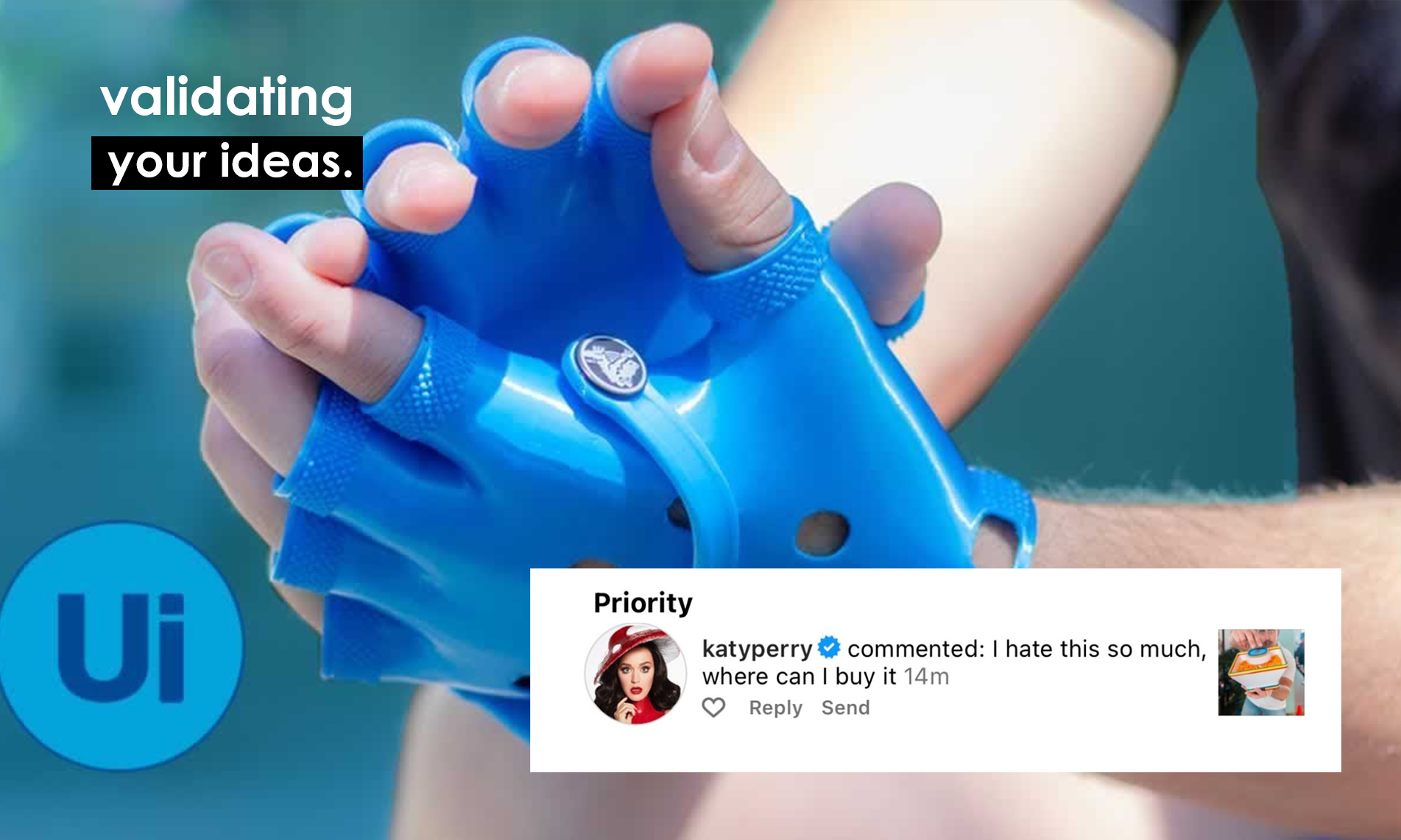
Meet Matty Benedetto, the internet's favorite creator of deliberately useless products. Through his "Unnecessary Inventions" project, he has created hundreds of comically impractical products such as the croc gloves, the lego vacuum, and the airpod chopsticks (you can watch one of his videos above).
Matty's creations are intentionally ridiculous -- that's the point. His YouTube channel has millions of views precisely because these inventions solve problems nobody has, in ways nobody wants.
He has turned unnecessary innovation into an art form.
But while Matty creates useless products on purpose (ironically Walmart is selling knockoffs of his products), many companies and entrepreneurs do the same completely unintentionally. They pour time, money, and resources into "solutions" that nobody asked for, solving problems that don't really exist.
The business graveyard is full of companies that skipped validation and jumped straight to implementation. Juicero raised $120M to build a $400 WiFi-connected juicer that squeezed juice packets you could squeeze with your hands (they certainly felt the squeeze!). 3D TVs were were hyped as the future of home entertainment, promising to replace cinema--but consumers didn't want to wear glasses in their living room that gave them a headache. Webvan assumed people would order groceries online ... in 1999 ($1.2B loss... though they were just 20 years too early).
These weren't stupid people making obviously bad decisions. They were smart teams who fell in love with their ideas and forgot to ask one crucial question: "Does anyone actually want this...right now?"
That's why validating your ideas matters. It's the difference between Matty's intentionally unnecessary inventions and accidentally unnecessary ones. In a sense, validating your idea is about making sure your brilliant solution isn't solving a problem that only exists in your head (and that's true for every aspect of your strategy).
Traditional Strategic Management vs. Entrepreneurial Validation
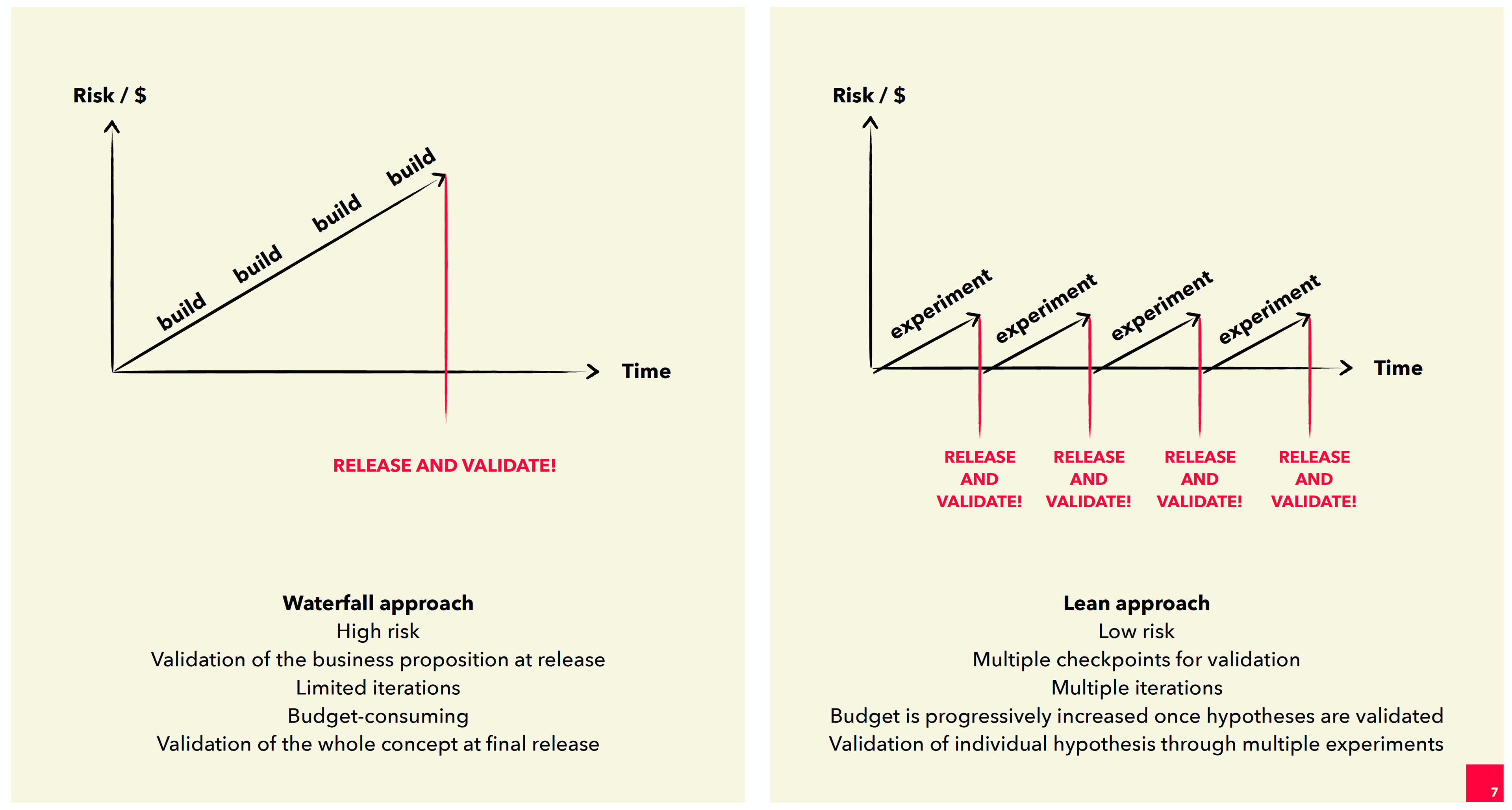
There are generally two broad approaches to validating your ideas and bringing them to market. The traditional "waterfall" approach believes in building a complete, polished product before launch. Think Google Glass, which spent years (and millions) in development before discovering people weren't ready for face-mounted computers, or Quibi (our example above), which burned through billions creating content before learning that people didn't want to pay $10 to watch "premium" content when they could get similar content for free.
The entrepreneurial "lean startup" approach takes the opposite path: start with the smallest viable version of your idea and test it with real customers. Instead of building a full product, you might start with a bare bones MVP and see if anyone may want to try it. Dropbox famously launched with just a video showing how their product would work (you can watch it here), while Airbnb began with the founders renting out air mattresses in their apartment. These minimal viable products (MVPs) helped validate core assumptions before major investments.
The difference here is not only about speed or budget -- it's also about risk management. The waterfall approach bets everything on initial assumptions being correct, while the lean approach makes smaller bets and adjusts based on real customer feedback. Neither approach is perfect (you can watch Peter Thiel discuss the limitations of the lean startup approach below).
Smart organizations today often combine both approaches: using thorough strategic analysis to identify opportunities, but testing core assumptions with MVPs before making major investments. After all, it's better to learn your assumptions were wrong when you have spent thousands rather than millions (and in the process collect a lot of useful information).
You can use the following guide by the Board of Innovation that covers 24 ways to test your ideas [read here]. Note that many of these tests are in the context of entrepreneurship, but they also apply for corporate innovation.
Trust me Bro! The Art of Unvalidated Recommendations
Every semester, I see brilliant students come up with creative solutions that would make even Matty Benedetto proud (though unintentionally). Here are some real examples from past strategic analyses.
- "Nike should launch a line of luxury sport handbags to capture the high-end fashion market" (Trust me bro, sneakerheads are dying for $2000 Nike purses)
- "McDonald's should open fine dining restaurants to compete with Michelin-starred establishments" (Trust me bro, nothing says gourmet like a Big Mac served on fine china)
- "Walmart should develop its own social media platform for shoppers" (Trust me bro, TikTok really needs Great Value competition)
- "Use AI to revolutionize ... well, everything because... well, AI" (Trust me bro, slapping AI on any problem is definitely the solution -- just like adding blockchain was in 2017, or .com in 1999).
These recommendations came from smart students who (hopefully) did their research, crunched the numbers, and even used ChatGPT to help them come up with these ideas. The only problem? They forgot to check if their solutions made any common sense ... you know, in the real world.
Here's how the "Trust me, bro" approach typically plays out:
(1) Find a problem that seems obvious to you
- "Young people don't like traditional banks" (Did you ask them?)
- "Everyone hates doing laundry" (Define everyone...)
- "People want more sustainable products" (At what price point?)
(2) Come up with a creative solution
- "Let's make a TikTok-banking app with NFTs!" (What could go wrong?)
- "A subscription service for AI-powered laundry robots!" (Only $999/month!)
- "Organic, biodegradable everything... at 5x the price!" (Take my money!)
(3) Back it up with some quick Google searches and ChatGPT
- "A random blog said the market will be worth $50B by 2030!"
- "My roommate and mom said they'd totally buy it!"
- "ChatGPT suggested the idea so it must be lit."
(4) Present it with complete confidence
- "Trust me, this can't fail. All group members love it."
- "This graph from Statista speaks for itself" (Where the labels?)
- "It's disrupting the industry!" (Which industry?)
The problem isn't that these ideas aren't creative – they are! The problem is that they are often built on assumptions that nobody bothered to test. Just because ChatGPT can generate a 10-page business plan for your "Uber for Pets" idea doesn't mean actual humans want to use it.
Therefore, a big part of your project should be spent on validating your strategic recommendations before they join Matty's hall of unnecessary inventions (though with less entertaining results).
Because while making deliberately useless products can lead to YouTube fame, making accidentally useless ones usually just leads to expensive failures (and poor grades at the end of the semester).
How much validating is enough?
There is really no point at which you will know for sure whether an idea will work or not. How much time you spend validating an idea will vary based on the complexity, risk and potential impact of the idea. However, it's important to validate your idea at least to some degree. Once again, the key is to strike a healthy balance -- that is, validate your idea as much as possible without becoming too bogged down in research and analysis, as this can slow down the development process and prevent you from acting on your idea.
Below, we will cover how to think about validating your ideas in a more systematic way.
The Three Questions That Make or Break Your Strategy
Before you recommend that Nike should start selling luxury handbags or McDonald's should launch a chain of high-end restaurants, let's talk about the three questions that separate solid recommendations from wishful thinking.
1. Is There Real Evidence of the Problem or Opportunity?
It's not enough to say "Gen Z loves sustainability" or "everybody is going digital." You need concrete evidence. When Target decided to expand their active wear line All In Motion, they weren't randomly guessing that people wanted affordable workout clothes. They analyzed sales data from existing products, studied customer reviews of competitors like Lululemon, and tracked growing searches for "affordable activewear." That's how they built a billion-dollar brand in just one year.
2. Are Your Solutions Actually Feasible and Desirable?
Just because you can do something doesn't mean you should. When Coca-Cola launched "New Coke" in 1985, they had mountains of taste test data showing people preferred the sweeter formula. What they missed? Nobody actually wanted them to change the original (they forgot to test this assumption). Your recommendation needs to pass both the "can we do it?" test and the "should we do it?" test.
Ask yourself: Does this fit the company's capabilities, culture, and brand? Will customers actually value this change?
3. What Core Assumptions Need Testing?
Every recommendation rests on assumptions. Your job is to identify and validate the critical ones. If you are suggesting Starbucks should expand into rural areas, you are assuming: (a) rural customers want premium coffee, (b) they will pay Starbucks prices, and (c) the company can operate profitably in lower-traffic locations. Each of these needs validation before you bet the farm on your rural coffee empire.
Remember: Good strategic recommendations are not about what sounds smart in theory. They are about what will actually work in reality.
From "We Think" to "We Know": Mapping Your Assumptions
Ever confidently ordered food for a group without asking what they want? Yeah, that's running a business based on assumptions. Most strategic plans are built on a mountain of "we think" statements that nobody's bothered to check. Most student analyses are similarly build on "We Think" statements that nobody bothered to check.
So your first task is to write down your key assumptions – everything from "customers will pay $50/month" to "people hate doing their laundry." Then get creative about testing them cheaply. Use multiple sources to confirm your hunches (what nerds call "data triangulation").
For example, if you think people hate pet food delivery prices, don't just trust that one angry Yelp review. Check Reddit discussions, analyze competitor reviews, and survey some actual pet owners. When three different sources all scream "too expensive!", you are onto something. The goal is simple: transform your "we think" into "we know" before betting the farm – or your future paycheck – on an untested assumption.
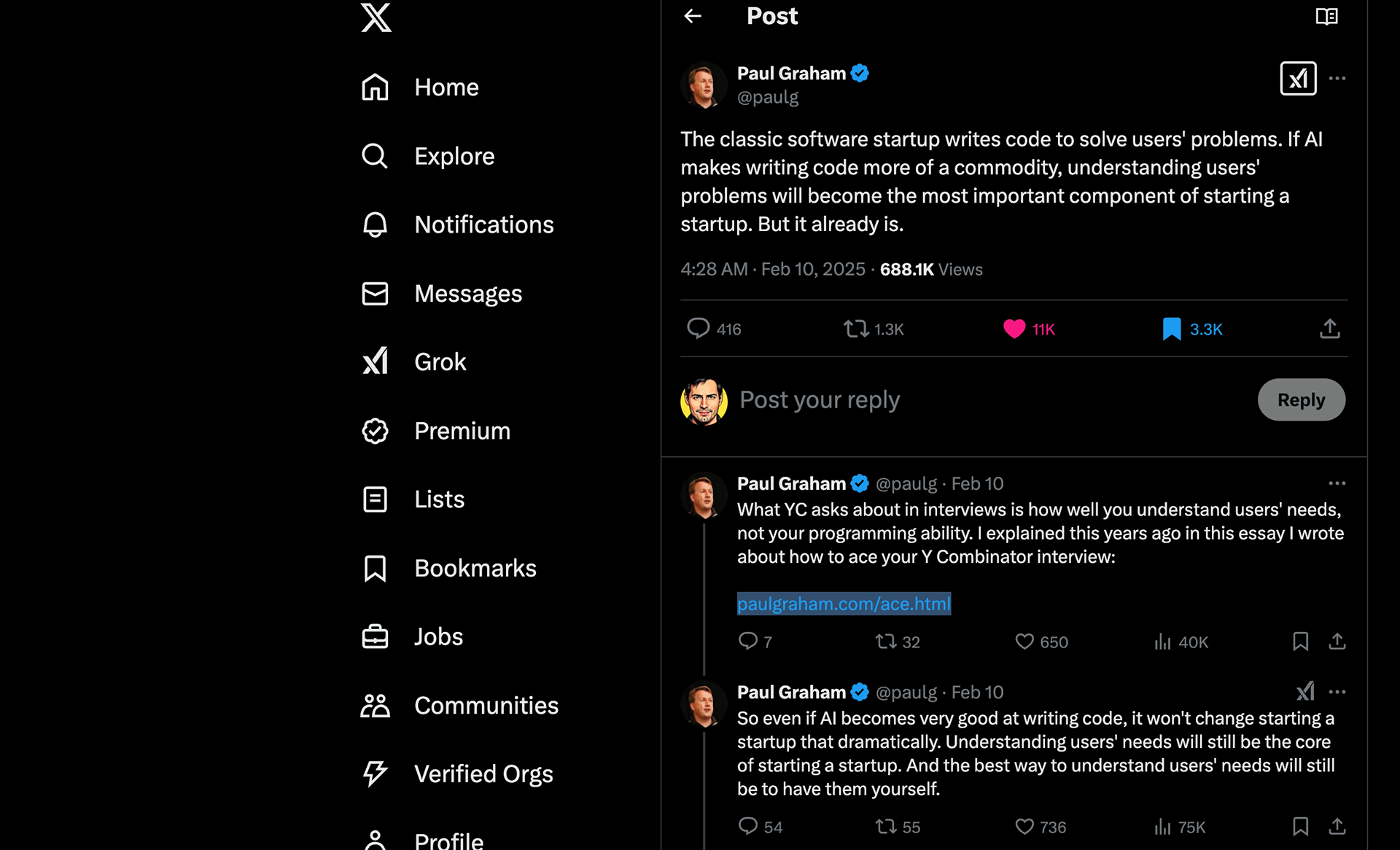
Three Methods to Validate Your Ideas
There are about as many ways to validate ideas as there are ideas themselves. And, the best way to validate your solution is to actually build it and see how people vote with their behavior (do they walk the talk or just talk the talk).
You are of course welcome to build something (and this is now easier with AI than ever before -- e.g., you can vibe code a solution).
Instead of throwing every validation method at you, however, we are going to focus on three (more practical) approaches that: a) you can actually do as a student, b) don't require a venture capital budget, and c) will significantly strengthen your strategic recommendations.
Think of these methods as your validation starter pack. They won't cover every possible scenario, but hopefully they will give you a good foundation to start testing your strategic assumptions.
Note: You will have to submit a validation package for your strategic analysis based on the work below (if you don't, you will fail your strategic assignment; in other words, this is a MUST).
Let's dive in.
Expert Interviews (3–5 for your final paper)
Start with 3-5 interviews of experts.
You'd be surprised how many professionals will talk to a student. Your .edu email is basically a VIP pass on LinkedIn.
Who counts as an expert?
Professors, store managers, LinkedIn professionals, industry analysts ... anyone with real experience that can help you understand your company/product.
How to reach them?
Start with CSU alumni and professors. On LinkedIn, send a SHORT message and mention you are a student working on a capstone project, be specific about what you need, ask for 10–15 minutes of their time max.
What are good questions to ask?
- What's the biggest misconception outsiders have about this industry?
- What specific strategies have you seen fail, and why?
- What factors do analysts overlook?
Bad questions
- What do you think about the industry? (too vague)
- Will our idea work? (too direct and leading)
- What should the company do? (that's your job)
What did you learn? If three experts say "companies try that every five years and it never works", well, you need to rethink your strategy. Document your interviews in an Appendix. If record them with Otter.ai (ask for permission), you can extract the transcripts and then analyze them with AI.
TIP: You can also look for interviews of experts online, although this gives you less flexiblity.
Customer Interviews (5-8 interviews)
Start with 5-8 interviews.
Open-ended questions beat yes/no questions.
- What frustrates you most about this product?" invites a story.
- Is it too expensive?" asks a leading questions and will get you a leading answer.
Customer Research (1000+ reviews)
Use apify to scrape online reviews at scale, then analyze them with AI [see tutorial on apify]
Once you download the CVS/JSON file, drop it in ChatGPT/Claude and ask it to analyze it (e.g., what is happening to reviews over time, what are the major themes for complains that emerge, are there any trends, and so on).
Triangulation
The main principles here is triangulation. If you see a pattern emerge in your customer interviews, online analysis, etc. then you will feel more confident about your solutions. One source can lie. Five sources pointing the same direction? That's emerging evidence.
You can see my guide/example with Chipotle here: [see tutorial here]
TOOLS FOR YOUR ANALYSIS
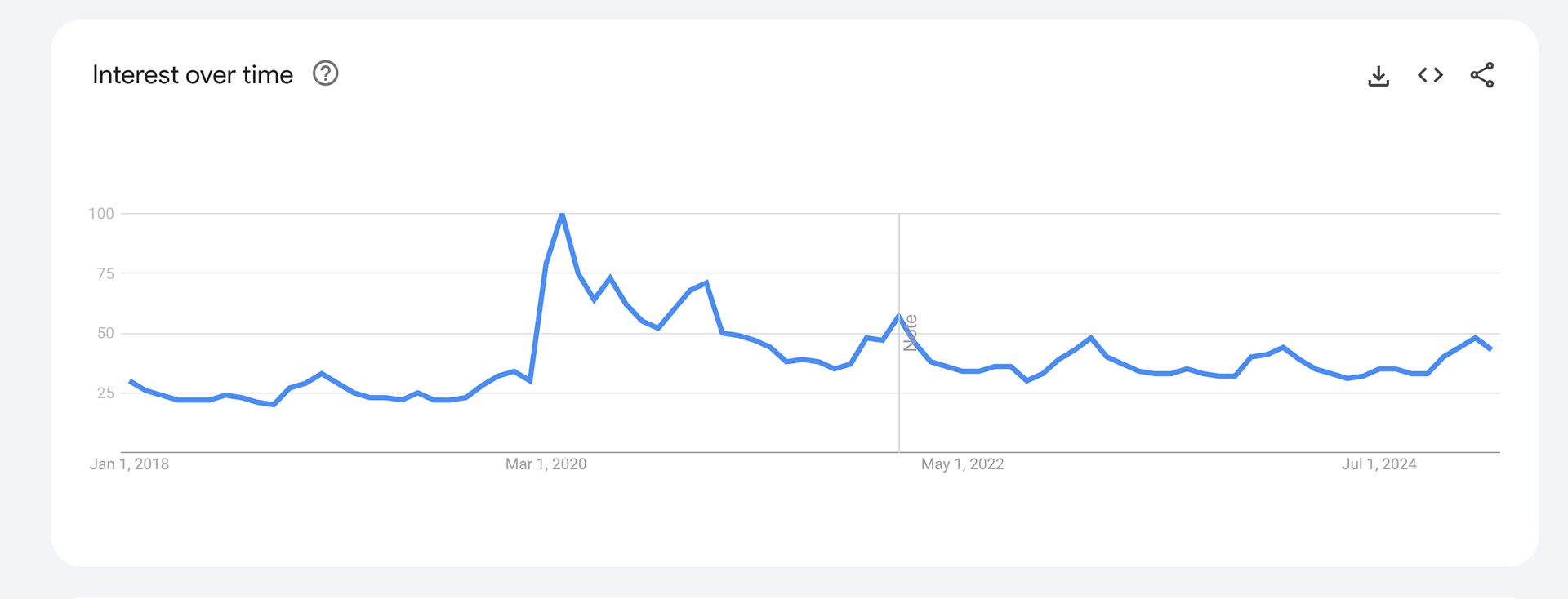
You can use the tools below (most of them are free) to understand growth trend of a particular problem, collect historical data on volume searches (e.g., home gym) that can give you an idea of what happens to different trends over time by different categories, keywords, etc.
Look for underserved search volume pockets that could be worth tackling. For exmaple, if you observe that the volume of searches for a particular keyword related to fitness equipment has been increasing steadily over the past few years, you can assume that the demand for this product is growing. You can see in the graph (above) that interest in home gym equipment spiked during the Covid pandemic as expected (but it is still higher than its average trend in the past decade).
1. Google Trends: https://trends.google.com/trends/
2. Pinterest Trends: https://trends.pinterest.com/
3. Subreddit Stats: https://subredditstats.com/
4. Keywords Everywhere (use the free version for Twitter/X/Instagram/Pinterest Engagement & Insights): https://keywordseverywhere.com/
You can use the tools below to validate if people are willing to spend money on your idea. These tools provide you with insights into the market size, investment in startups and the estimated monthly sales of products related to your trend. For example, if you find that a few startups in the fitness industry have received funding and are estimated to have a large monthly sales volume, you can assume that people are willing to spend money on solving this problem.
5. Crunchbase: You want to look for startups that have recently received funding. The assumption is that in order to get funding you have to convince someone that there a market exists for your idea (these are early-stage start-ups).
6. Similarweb shows traffic sources to different websites (paid and you don't have to use it for your project, but good to know).
7. Jungle Cloud is an amazon investigation tool that can help you estimated monthly sales and figure out what are people spending money on (also paid and you don't have to use for your project)
Part A: Real World Product Failures (15 min)
Identify 3 product failures from any industry. For each one:
- What was the product? (brief description, include a picture)
- What key assumptions did the company make?
- Why did it fail in the market?
- What validation methods could have prevented this failure?
Part B: (Your) Unnecessary Invention (20 min)
Invent a completely unnecessary product for college students. Include a product name, tagline, image (use AI to generate it), and key “features.” Pitch it to the class in 60 seconds.
Part C: Flip It (5 min)
Based on the product failures you researched and the unnecessary invention you created:
- What were the most common validation mistakes you observed? What patterns emerged?
- Now look at your OWN project. What assumptions are you making about your company’s problems that you haven’t tested? What’s your “Trust me bro” moment?
Write it down. This becomes the focus of your validation sprint.
OUT OF CLASS VALIDATION
You have one class session (outside of class) to complete this. Everything here feeds directly into the Validation section of your final paper.
1. Expert Interviews
3–5 conversations, 10–15 minutes each. Professors, alumni, LinkedIn professionals, store managers, analysts — anyone who understands the industry.
2. Customer Interviews
5–8 conversations, 10–15 minutes each (~2 hours total). Talk to actual customers or users of the product. Focus on real behavior, not hypotheticals.
Here is a guide on how to approach customer interviews [download here].
3. AI-Powered Review Analysis
Use apify to scrape 1000+ reviews from Google Reviews, Amazon, Reddit, Trustpilot — any site that's relevant for your product. Analyze them with AI.